What this lab covered
The first half of an engagement: reduce your own footprint, then build a picture of the target. I practised routing traffic through Tor to change my apparent source IP, then moved to active scanning of a Windows Server 2008 machine inside an isolated lab network from Kali.
Steps
- Go anonymous. Start the Tor service and route traffic through it, then confirm the public IP has changed from the real one before doing anything active.
- Find the host. From Kali, discover live machines on the lab subnet to locate the target's IP.
- Service & version scan. Run an Nmap version and OS detection scan against the target:
On the Windows Server this surfaces FTP (21), MSRPC (135), NetBIOS (139), SMB (445) and the dynamic RPC range.nmap -sV -O 192.168.206.130 - Aggressive scan. An aggressive scan adds default scripts, traceroute and more detail in one pass:
which confirms the build as Windows Server 2008 R2.sudo nmap -A -T4 192.168.206.130 - Banner grab. Use DMitry to confirm service banners.
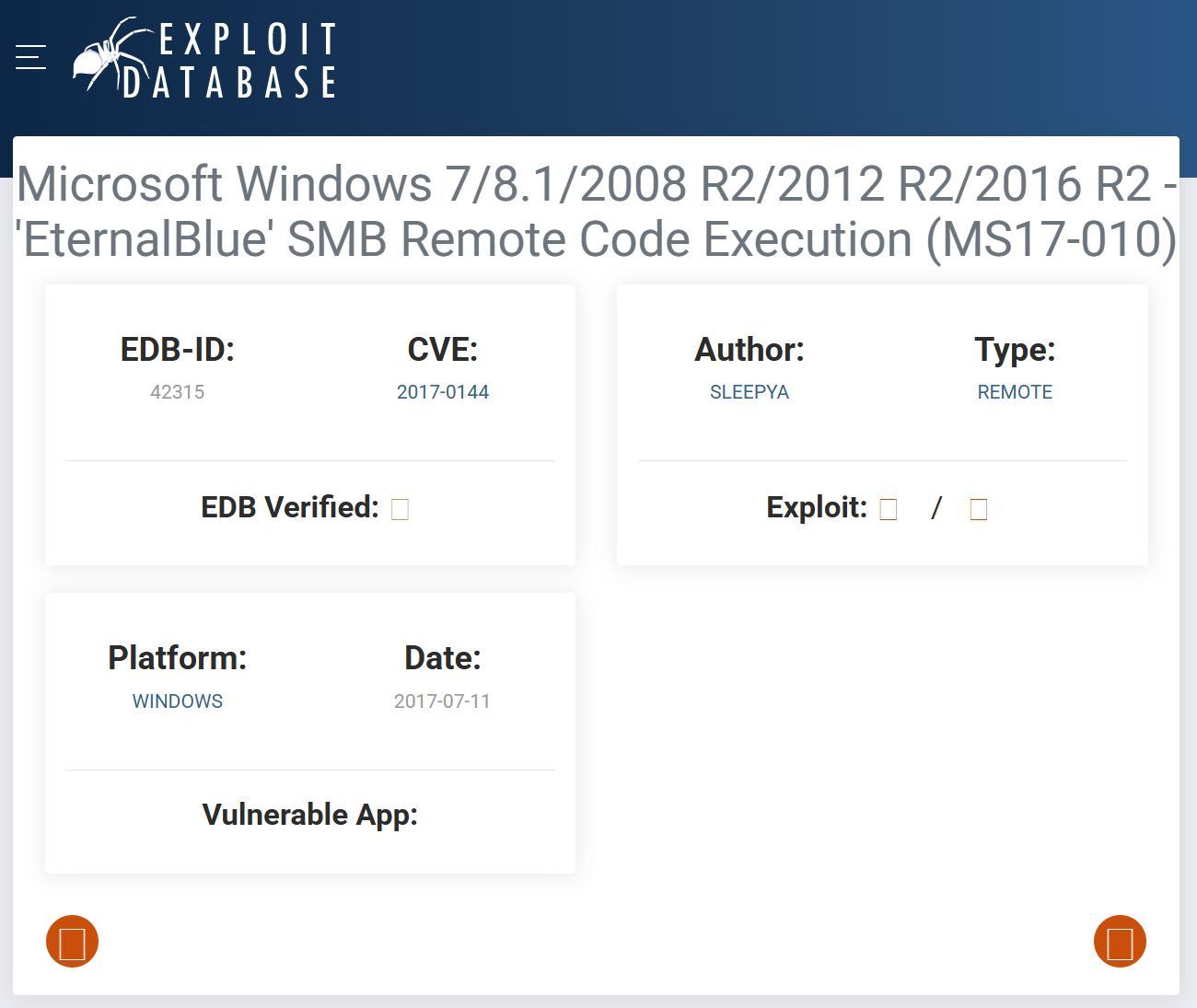
- Vulnerability scan. Run a Nessus scan against the host to turn the service map into a ranked list of findings — which points at known issues like the SMB vulnerability MS17-010 (EternalBlue).
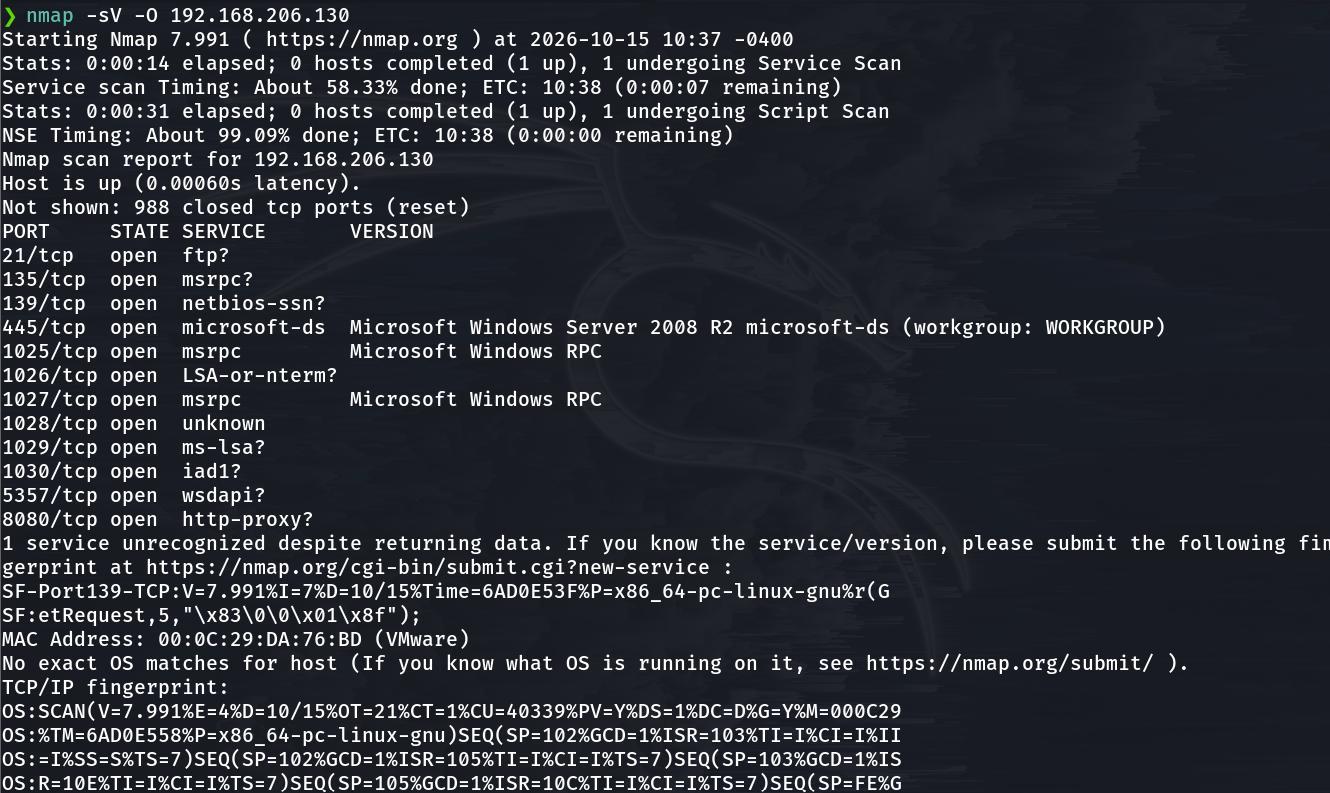
-sV -O maps the open services and fingerprints the OS.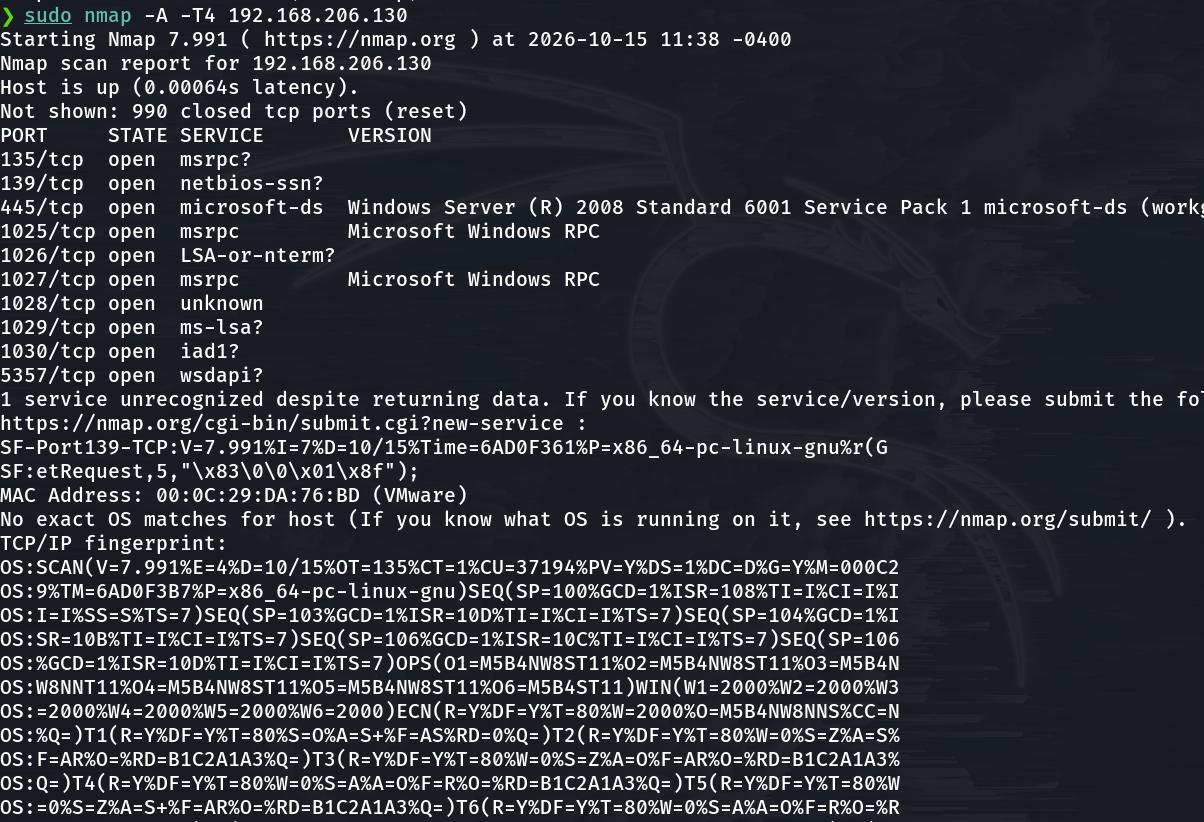
What I took from it
Recon is a funnel: anonymity first, then wide discovery, then focused version detection, then a vulnerability scanner to prioritise. The service versions are the part that matters, because they are what map to known CVEs next.
Defender's view
Most of what the scan found should not have been reachable. Closing unused services, segmenting SMB/RPC away from untrusted networks, and patching (MS17-010 has had a fix since 2017) removes most of the surface a scan like this depends on. Noisy scanning is also very detectable — IDS signatures and connection-rate alerts catch it easily.